

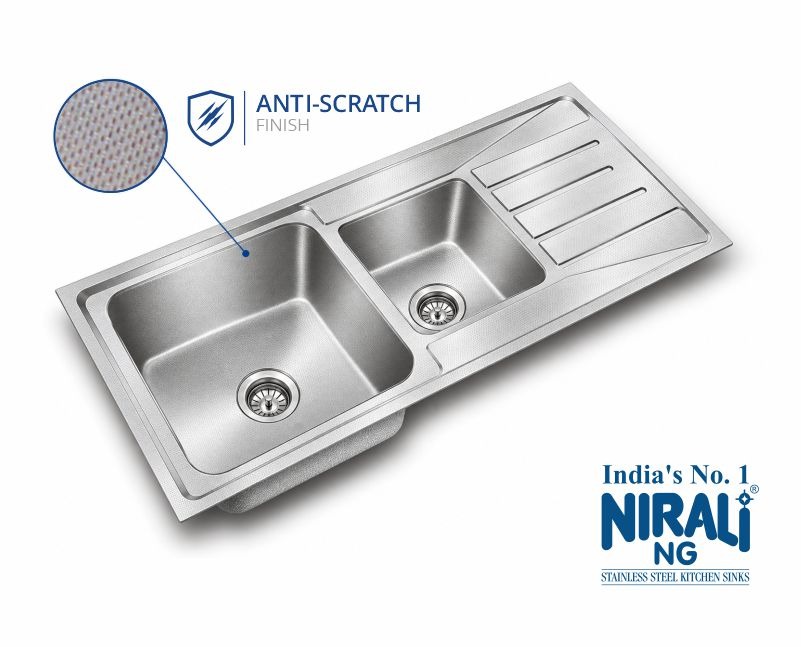
27 Oct Anti-Scratch Finish for Kitchen Sinks: Benefits, Care and Maintenance
A kitchen sink is used several times a day for washing dishes, utensils, cookware, and food items. Constant contact with utensils, vessels, water, and cleaning materials can leave scratches and surface marks over time.
An anti-scratch finish is designed to improve a sink’s resistance to scratches, minor abrasions, and everyday wear. It helps the sink maintain a cleaner, more consistent appearance with regular use.
For a kitchen sink, understanding how an anti-scratch finish works and how to care for it can help you make a better-informed choice and maintain its appearance for longer.
Don’t Miss: Stainless Steel Kitchen Sinks: Grades, Gauges & Top Brands
What Is an Anti-Scratch Finish?
An anti-scratch finish is a finish designed to improve a sink’s resistance to scratches and minor surface damage.
During everyday kitchen use, the sink comes into contact with stainless-steel utensils, cookware, cutlery, food containers, cleaning tools, and other items. Repeated contact can gradually leave marks on the surface. An anti-scratch finish helps reduce the visible effect of this everyday wear.
However, anti-scratch does not mean completely scratch-proof. The level of resistance depends on factors such as the sink material, type of finish, usage, cleaning methods, and maintenance.
Benefits of an Anti-Scratch Kitchen Sink
1. Helps Maintain the Sink’s Appearance
Regular washing and handling can leave small marks on a sink. An anti-scratch finish helps minimise the visible effect of minor scratches and abrasions, helping the surface maintain a cleaner appearance.
2. Better Suited to Everyday Kitchen Use
Kitchen sinks experience frequent contact with utensils, cookware, and cleaning materials. Improved scratch resistance helps the surface handle this regular use more effectively.
3. Helps Reduce Visible Wear
Over time, repeated contact can make a sink look worn. An anti-scratch finish helps reduce the appearance of minor surface marks, particularly with proper cleaning and care.
4. Supports Long-Term Surface Quality
By improving resistance to everyday scratches and minor abrasions, an anti-scratch finish can help the sink retain its intended appearance and surface quality for longer.
How to Care for an Anti-Scratch Kitchen Sink
An anti-scratch finish provides added resistance, but proper care is still important. A few simple habits can help maintain the sink’s surface.
Use a Soft Cleaning Sponge or Cloth
For everyday cleaning, use a soft sponge, cloth, or non-abrasive cleaning pad. Avoid rough scrubbers that may leave scratches.
Avoid Harsh or Abrasive Cleaners
Use a mild cleaning solution recommended for the sink material. Avoid abrasive powders, strong chemicals, or cleaning products that are not suitable for the finish.
Clean the Sink Regularly
Food residue, grease, soap, and mineral deposits can build up if left for too long. Regular cleaning helps keep the sink hygienic and makes it easier to maintain its appearance.
Rinse and Dry After Cleaning
After washing the sink, rinse away any cleaning residue and wipe the surface dry with a soft cloth. This can help reduce water spots and mineral deposits, particularly in areas with hard water.
Avoid Dragging Heavy or Sharp Objects
Even a scratch-resistant sink can be marked by sharp edges or heavy cookware. Where possible, lift rather than drag heavy pots, pans, and other objects across the sink.
Proper care complements the anti-scratch properties of the sink and helps maintain its appearance over time.
How to Choose an Anti-Scratch Kitchen Sink
When selecting a kitchen sink, consider more than just its appearance. Look at the material, finish, thickness, usage, cleaning requirements, and overall construction.
If the sink will be used frequently, improved scratch resistance can be a useful feature to consider. Also check the manufacturer’s care instructions to understand how the surface should be cleaned and maintained.
Choosing a sink based on your kitchen usage, cleaning routine, and maintenance needs can help you find a practical and durable option for everyday use.
Conclusion
An anti-scratch finish helps a kitchen sink resist scratches, minor abrasions, and everyday wear. It can help maintain the sink’s appearance and reduce visible signs of regular use.
However, no sink is completely scratch-proof. Proper cleaning and maintenance remain important. Using soft cleaning materials, avoiding abrasive products, and handling heavy cookware carefully can help preserve the sink’s finish and appearance for longer.
For everyday kitchens as well as busy commercial kitchens, understanding the sink’s material, finish, care requirements, and intended use can help you make a more informed purchase.
FAQs
- What is an anti-scratch finish?
An anti-scratch finish is designed to help a product’s surface resist scratches, scuff marks, and minor abrasions during everyday use.
- Does anti-scratch mean scratch-proof?
No. It reduces the risk of surface scratches but cannot prevent all damage. Protection depends on the material, finish, and how the product is used.
- What are the benefits of an anti-scratch finish?
It helps preserve the product’s appearance, limits visible wear, and reduces the need for frequent cosmetic upkeep.
- Can an anti-scratch finish be damaged?
Yes. Sharp objects, abrasive cleaners, rough scrubbing, and heavy impacts can still damage the surface. The finish’s durability depends on its type and application.
- How should I care for a product with an anti-scratch finish?
Clean the surface with a soft cloth or non-abrasive sponge and a mild cleaning solution. Avoid steel wool, scouring pads, harsh chemicals, and dragging sharp or rough objects across the surface. Always follow the manufacturer’s care instructions, as cleaning requirements vary by material and finish.
Sorry, the comment form is closed at this time.